Overview
A mobile app concept that builds eco-friendly habits.
As the sole designer on this project, I was in charge of understanding business goals and constraints from a stakeholder, conducting online and competitive research to clarify project direction, and using a human-centered, iterative design process to create and test interface solutions for the discovered needs.
Challenge
How can Americans be more conscious about the waste they throw away?
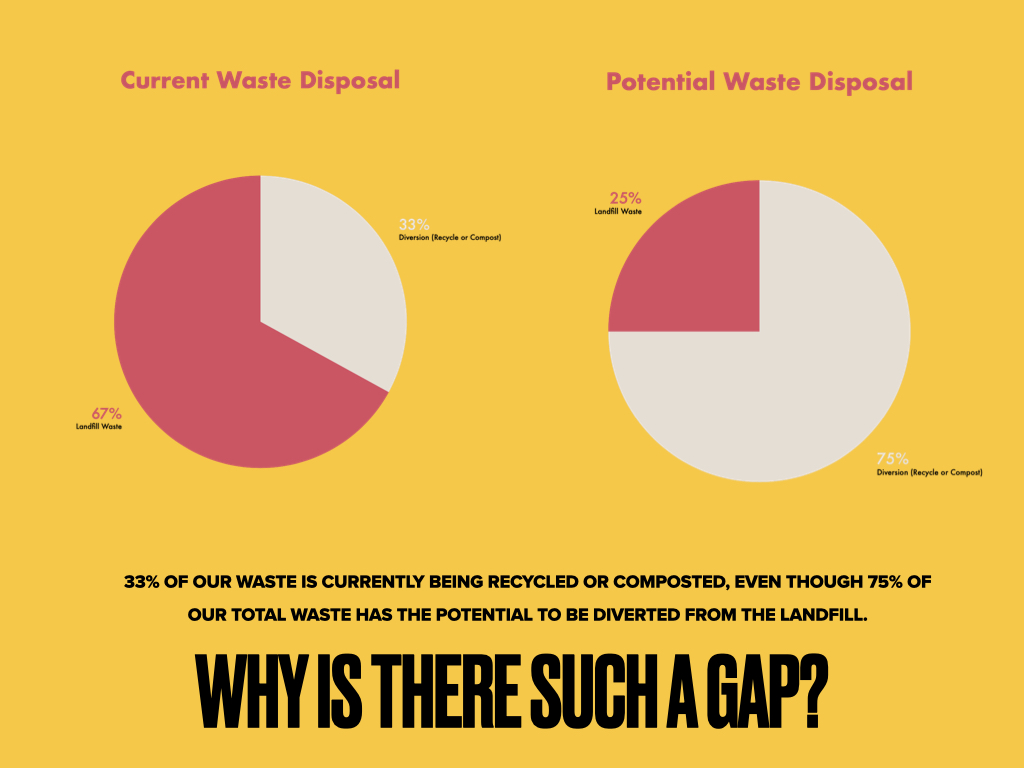
On average, a middle-class American family wastes over 4 million pounds of material per year to keep up with their lifestyle. A majority of that is what they throw away or recycle on a daily basis.
Process

Research
About one-third of the food produced and packaged for human consumption is lost or wasted, according to the Food and Agriculture Organization of the United Nations.
Landfills of rotting food and recyclable materials emit methane, a gas that is roughly 25 times more harmful than carbon dioxide.
Competitive Analysis
2Good2Go – connects community members to reduce food waste
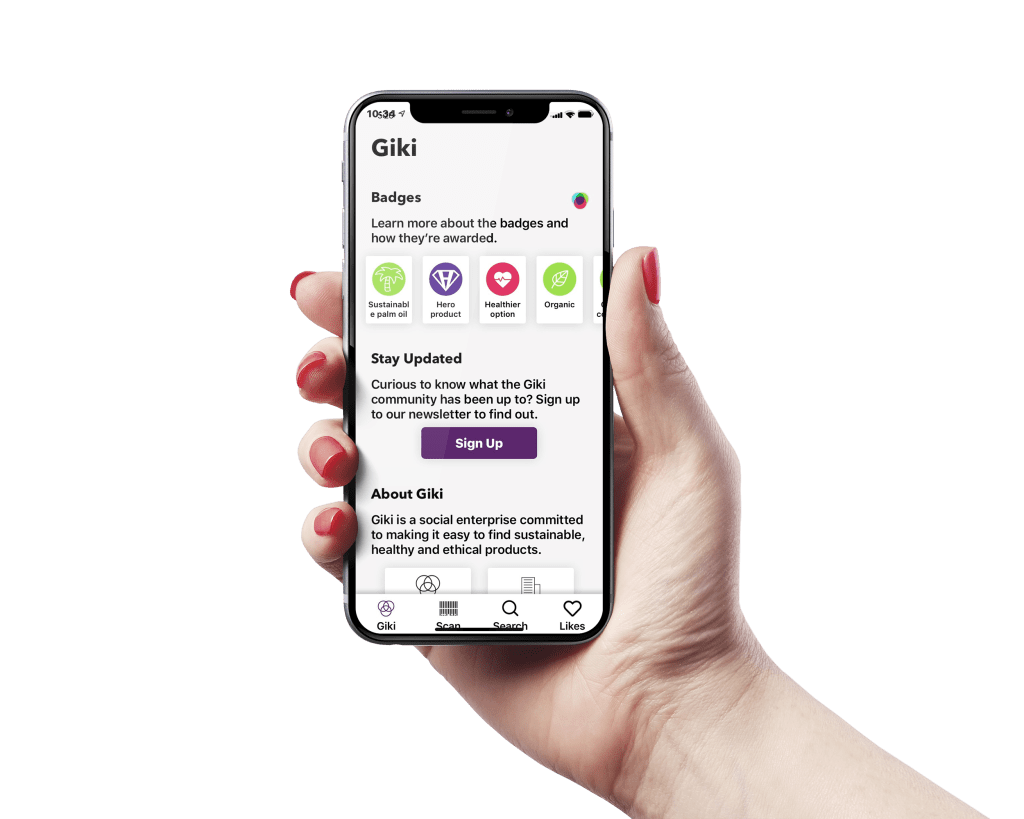
GIKI – identifies brands that are sustainable through barcode scanning
User Interviews
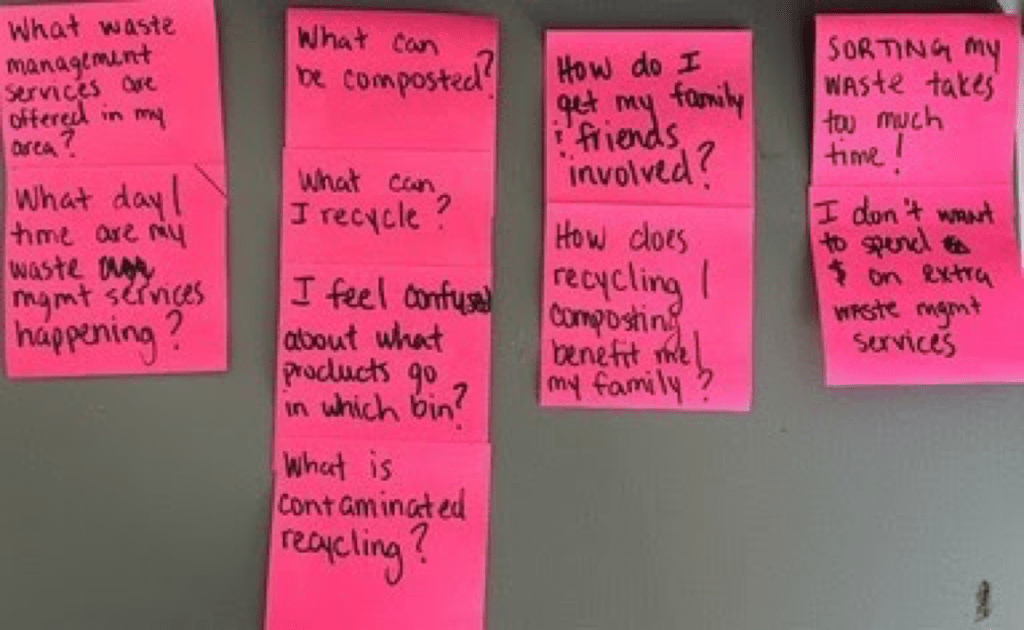
I conducted interviews with users within the target audience to get some insight into their thoughts and feelings on: their current waste management habits, reducing waste and being more conscious about what they throw away.
User Pain Points
- There is a disconnect between the user and their current waste management services.
- Users feel that sorting their waste is confusing and time consuming and are also unaware of the benefits to them.
- Users say that it is not always easy to tell if a product is truly eco-friendly just by looking at the packaging.
Problem Statement
How might we change the user experience of consciously reducing household waste by reinforcing the act with incentives and positive feedback?
Ideation and Feedback
I used this Crazy 8s sketching method to diverge and get as many ideas around the needs and benefits to solve for my users problem.
Along with fellow design students, we discussed and clustered my ideations in order to converge on solutions that best met the users’ needs.
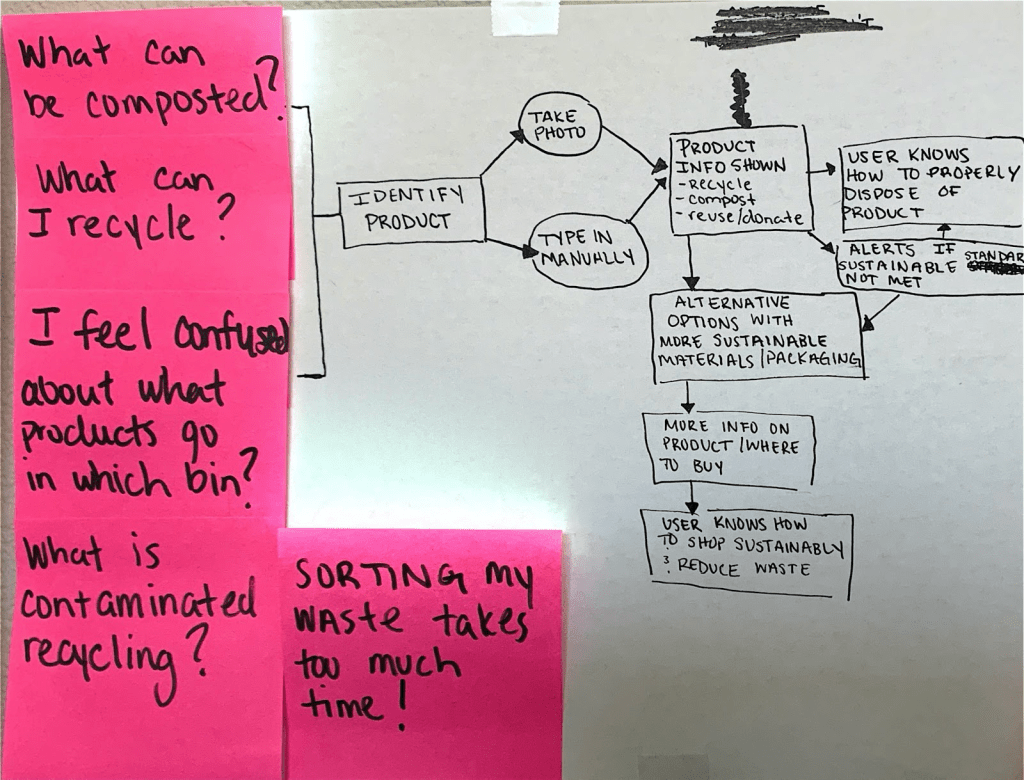
Task Flows
Next, I used the statements that I obtained from my user interviews to create task flows that explored what pathways these users may take to accomplish their tasks. It also helped me determine how many screens are needed, what order they should appear in, and what components need to be present.
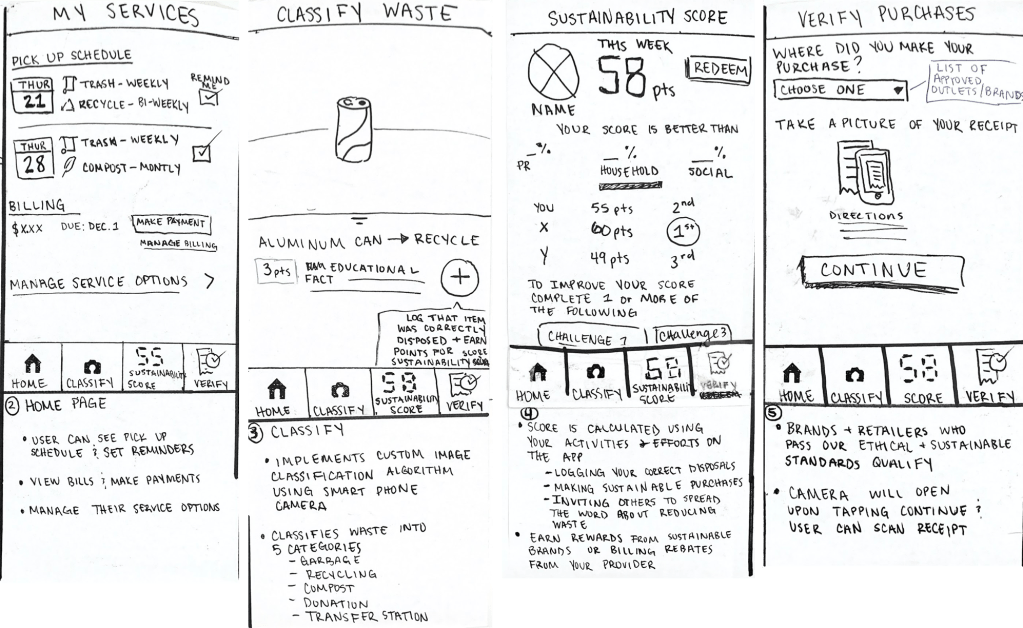
Wireframes and Iterative Testing
My initial wireframes explored how the users would stay informed on their waste pick up dates, identify the proper disposal method for an item using camera recognition and also earn a “sustainability score” to encourage their eco-conscious habits
Feedback received from fellow designers and the stakeholder allowed me to formulate questions to drive the design for my next iteration.
How might we….
- Prioritize and reduce the amount of information on screen.
- Simplify the “Sustainability Score”
- Provide incentives to users who are using the app.
Testing
After building a mid-fidelity prototype, I recruited users from my workplace to test my design.
I developed 3 tasks for my users to complete and observed their process. From this testing I was able to measure Utility, Learnability, Efficiency, Memorability, Errors, and Satisfaction
The Final Product
Eco Bins helps users build sustainable habits and incentivizes them through gamification, earning points for purchasing and properly disposing of their waste in compost or recycling bins, and earning real rewards for their eco-conscious behavior.
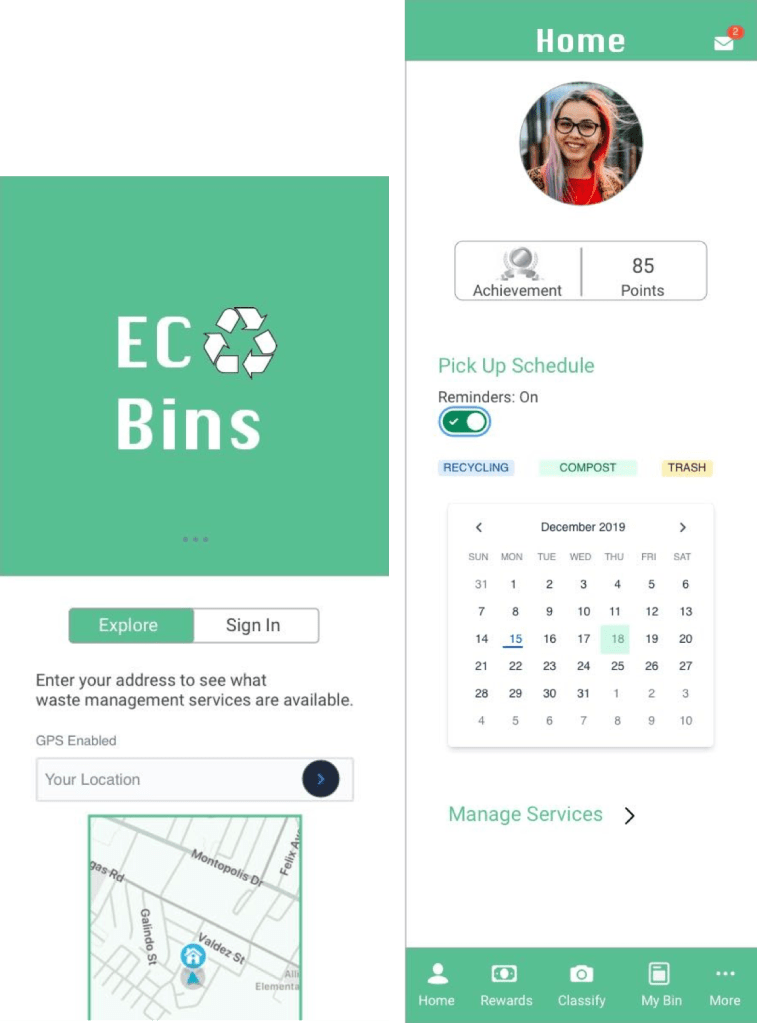
Login and Home
- The login page allows new users to explore and experience our app, and for returning users to connect their current waste management account.
- This eliminates the disconnect between users were experiencing previously.
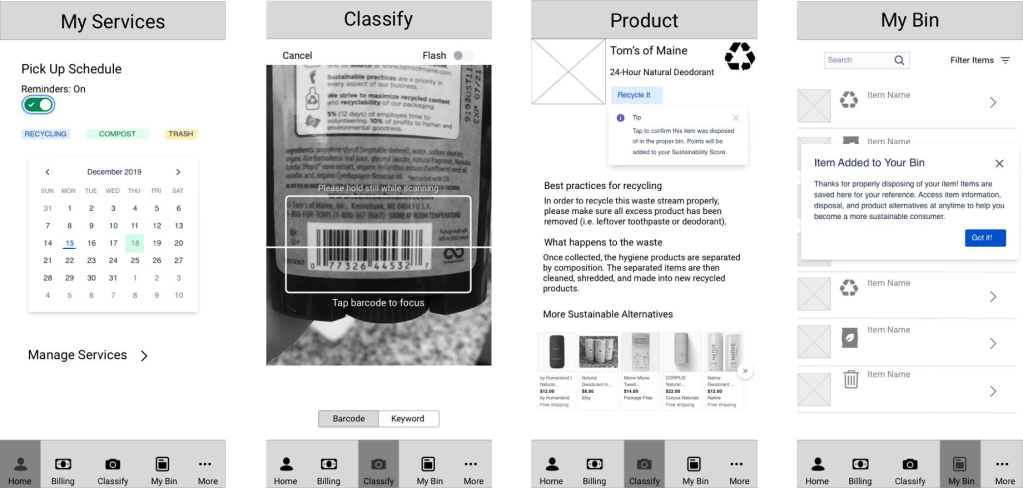
- They can view all services available to them, see pick up schedules, and set reminders.
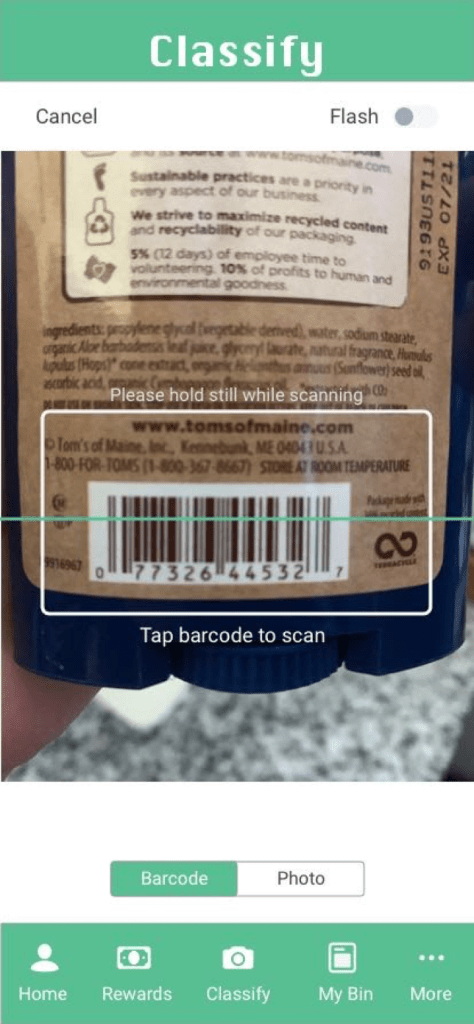
Classify
- Barcode scanning and photo recognition software allow users to quickly snap a picture of their waste and have it classified for them.
- Initially, a keyword search was included in an earlier iteration, but testing showed that users were more likely to use their camera capabilities to complete this task.
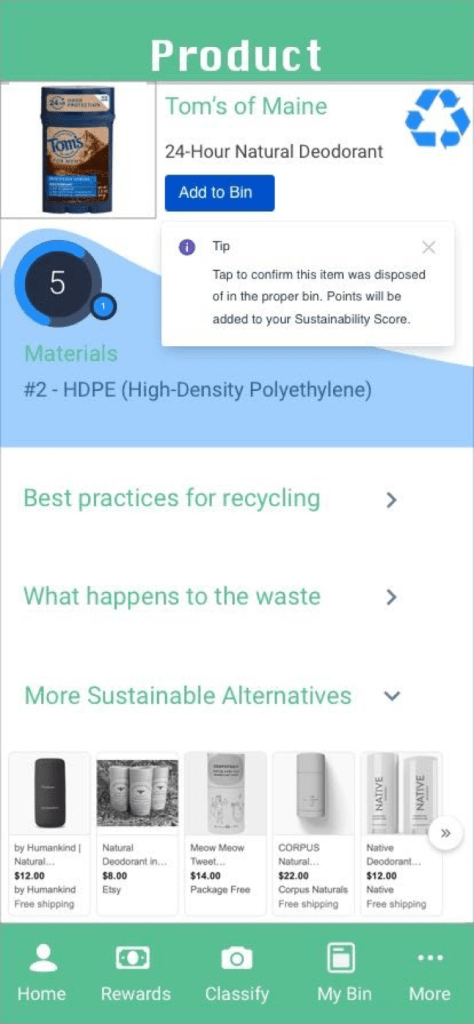
Product Page
- Product information and disposal method are prioritized
- Help tips added to aid first time users
- Secondary information revealed with drop-down
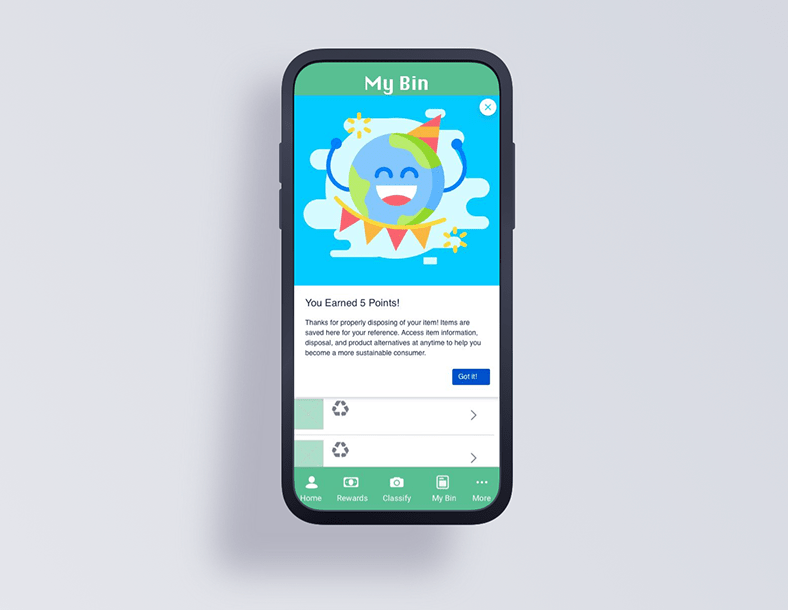
Points
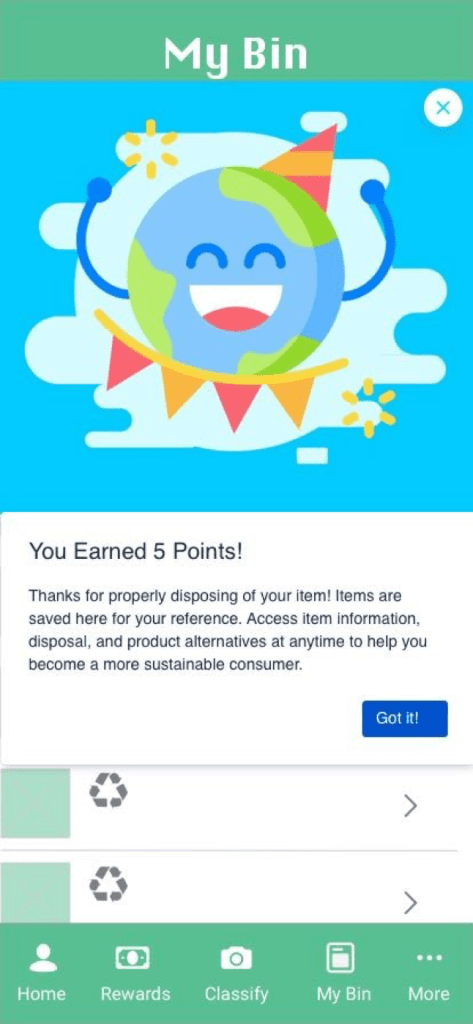
Through gamification and immediate positive feedback, good habits are more likely to be formed and continued.
Bin
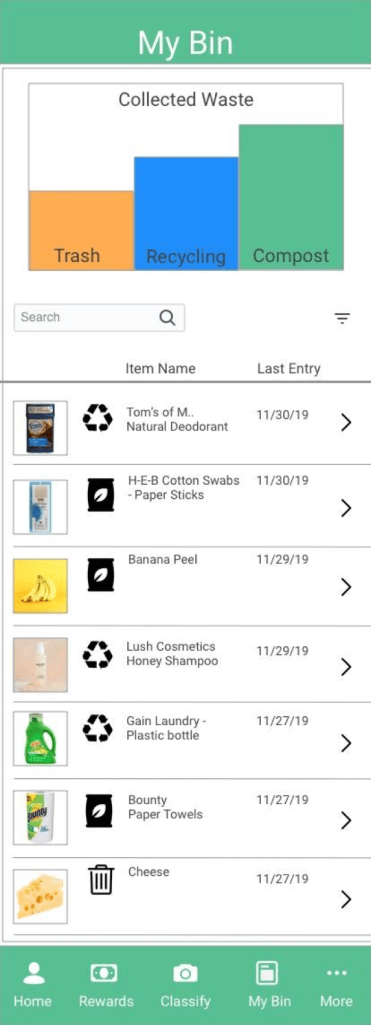
- Items are stored so the user can access information at any time.
- A live data visualization is provided so the user can easily track their waste disposal and see progress.
Rewards Tracker
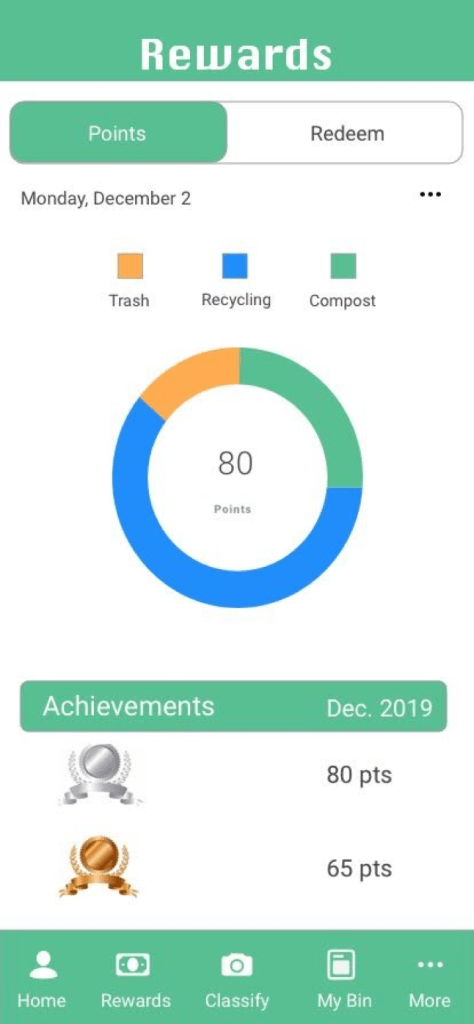
- Users need an easy way to visualize and track their earnings
- Provides a desirable stimulus reinforces the behavior, making it more likely that the behavior will reoccur.
Incentives
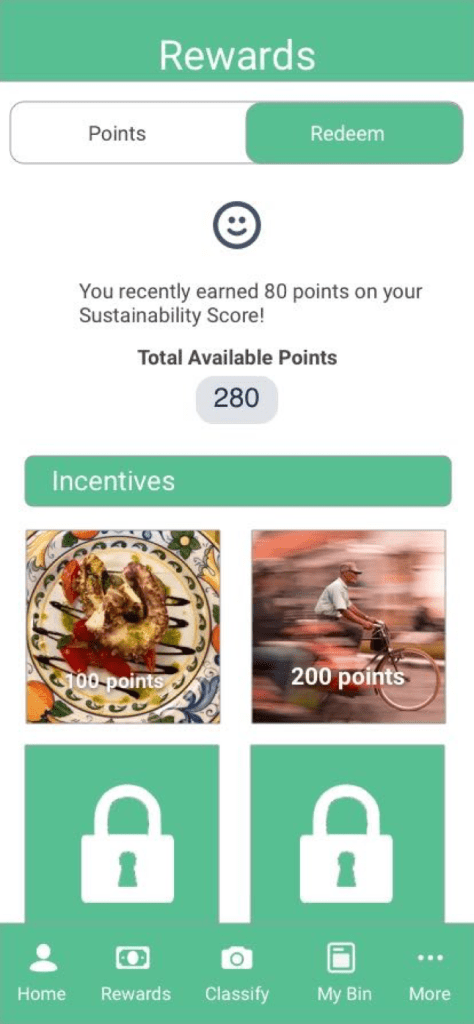
- Users expressed that real-world rewards would further incentivize their eco-friendly habits.
- Eco Bins offers tangible rewards such as products and services that the user can obtain by redeeming points and further cement their beneficial behaviors.
- Stakeholder saw this as a great way to build partnerships with brands who are truly eco-friendly and use it as a way to promote sustainability as well as generate ad revenue.
Retrospective
- User feedback and critique were essential to identifying the true needs within this design challenge.
- I would like to have identified a more specific user type or persona and tested within that group
- Iterative testing provided the most insight and I would like to further test and iterate on this app.


 Ally Trevino